
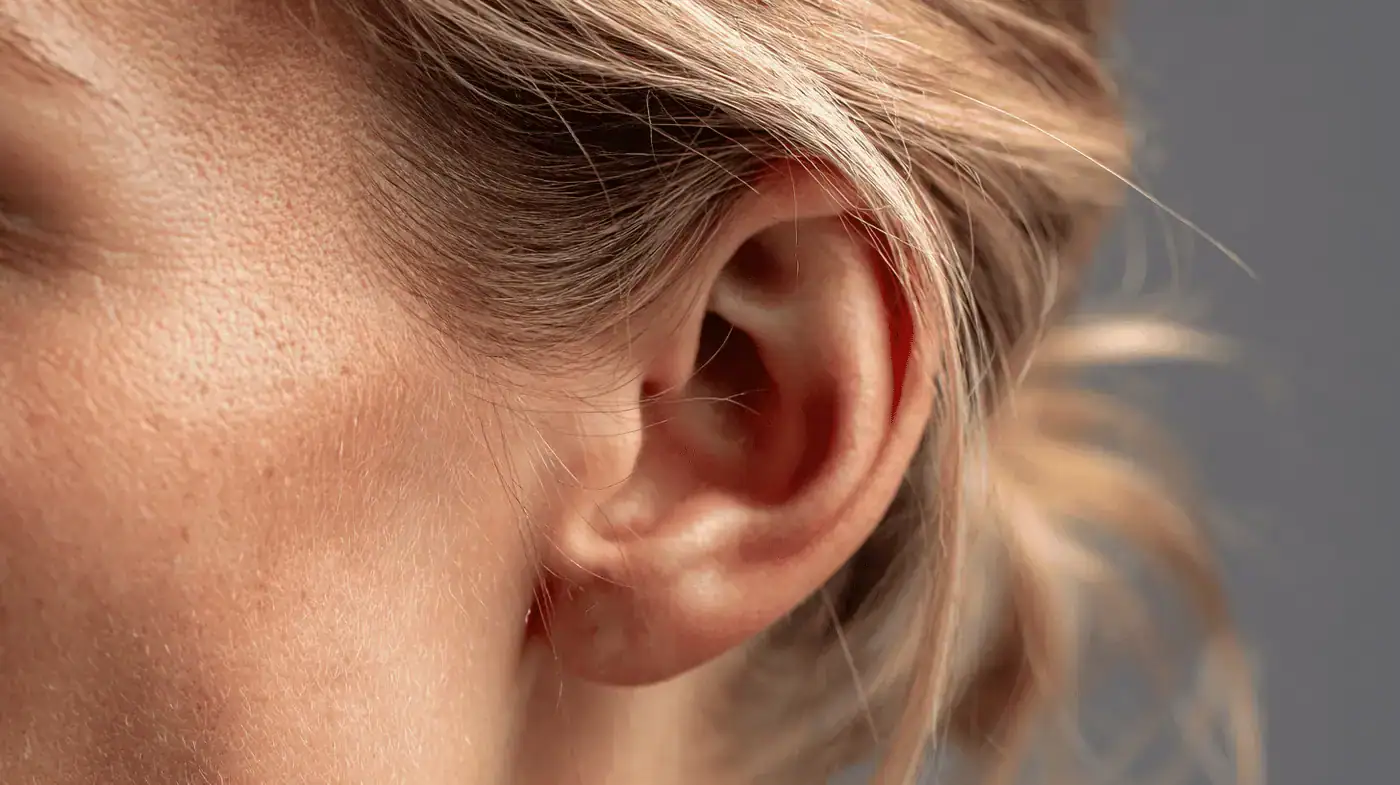
We had an extensive discussion about otoplasty, also known as ear pinning or ear reshaping surgery. This procedure corrects prominent or protruding ears by repositioning them closer to the head and recreating natural ear folds for a balanced, symmetrical appearance. Many patients pursue otoplasty because prominent ears can become a lifelong source of self-consciousness, beginning in childhood and continuing into adulthood.
Why Ears Protrude
Prominent ears typically occur because of one or both of the following anatomical features:
- Excess conchal cartilage: The conchal bowl (the deep central cup of the ear) pushes the ear outward from the skull.
- Underdeveloped or absent antihelical fold: Without this natural ridge, the outer ear lacks the normal backward bend and instead projects forward.
These are normal anatomical variations and are often hereditary. They are not caused by sleeping position, ear pulling, or environmental factors.
Surgical Technique
The procedure is done through a hidden incision placed in the crease behind the ear, keeping scars well concealed. The operation typically involves two main steps:
1. Conchal Cartilage Correction
- A precise portion of excess conchal cartilage may be removed.
- The remaining cartilage is pulled closer to the skull and secured to the mastoid fascia.
- Permanently placed sutures hold the ear in its new position.
2. Antihelical Fold Creation or Enhancement
- The cartilage on the front surface of the ear is gently weakened.
- Permanently placed sutures behind the ear are used to fold the cartilage into a natural antihelical ridge.
- This creates the recognizable curvature of a naturally shaped ear.
Once these steps are complete, the incision behind the ear is closed with absorbable sutures.
Dressings and Immediate Recovery
At the end of the procedure, a large protective dressing is placed around the head. This dressing helps reduce swelling, protects your results, and keeps the ears in their ideal position early on.
- The dressing stays on for about one week.
- After removal, patients switch to a soft headband.
- The headband is worn full-time at first, then at night for several weeks.
This helps prevent accidental pulling, folding, or shifting of the ears during the early healing period.
Age Considerations
Otoplasty can be safely performed once the ear has reached near-adult size, usually around age 5 to 6. Many children have surgery before entering school to prevent teasing or social distress. Adults of any age can also undergo otoplasty with excellent results.
Expected Recovery Timeline
- 1 week: Dressing removed, headband begins.
- 1 to 2 weeks: Most bruising improves.
- 5 to 7 days: Many patients return to school or desk work.
- 4 to 6 weeks: Nighttime headband use continues.
- 6 to 8 weeks: Return to strenuous activity, contact sports, and heavy exercise.
During recovery, you must avoid any pressure on the ears, including sleeping on your side, for the first several weeks.
Setting Realistic Expectations
Otoplasty provides one of the highest patient satisfaction rates in plastic surgery because it corrects a lifelong concern with predictable and natural-looking results. However, it is important to understand:
- Mild asymmetry is normal — no two ears are identical.
- Results are long lasting, but minor changes over time are possible.
- A small percentage of patients may experience partial recurrence and need revision.
- The goal is improvement, not creating perfectly matched ears.
Potential Risks and Complications
- Temporary numbness around the ears
- Asymmetry between ears
- Over-correction or under-correction
- Suture visibility or suture failure
- Hematoma (collection of blood)
- Infection
- Cartilage irregularities (rare)
- Scar issues behind the ear (usually minimal)
These complications are uncommon when surgery is performed carefully and when post-operative instructions are followed closely.
Results
Once healed, the ears sit closer to the head with a natural contour and improved symmetry. The incision behind the ear typically fades extremely well. Most patients feel a significant boost in confidence, especially in hairstyles or situations where the ears are more visible.
Making the Decision
Choosing otoplasty is a personal decision based on comfort, confidence, and aesthetic preference. Whether for yourself or a child, the goals are natural appearance, balanced facial proportions, and long-term stability. Take time to review everything we discussed, and feel free to reach out with additional questions.
Photos were obtained, a quote was given, and the patient will return in a week for additional discussion if needed.
